

UV Transilluminator
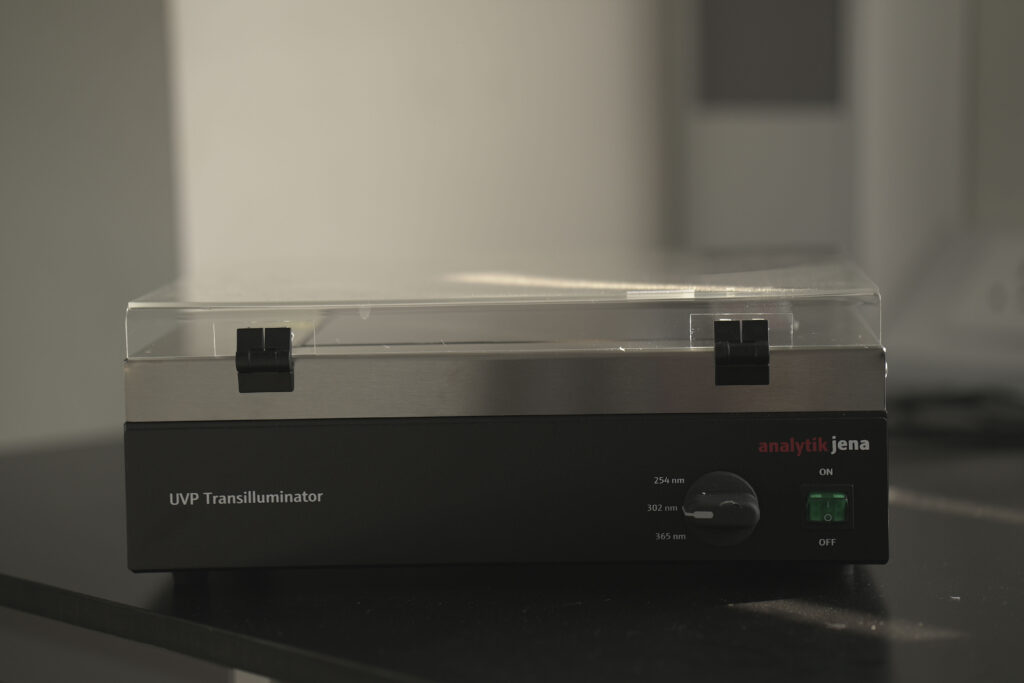
Make
Analytik Jena
Model
UVP
UV transilluminator is a laboratory instrument used for visualizing DNA, RNA, or protein samples that have been separated by gel electrophoresis. It emits UV light, which causes the fluorescent dyes or stains in the samples to emit visible light, allowing the bands of DNA, RNA, or protein to be visualized.
UV transilluminators are commonly used in molecular biology and biochemistry laboratories for a variety of applications such as DNA sequencing, cloning, and protein analysis. They are available in a range of sizes, and can accommodate different sizes of gel trays.
UV transilluminators typically use long-wave ultraviolet light (UV-A) with a wavelength of 365 nm, although some models may use shorter-wave UV light (UV-B or UV-C) for specific applications. They are equipped with a filter that blocks visible light, which can interfere with the visualization of the fluorescent signals.
Overall, UV transilluminators are an essential tool in molecular biology and biochemistry research, allowing scientists to visualize DNA, RNA, and protein samples separated by gel electrophoresis. They are easy to use, require minimal maintenance, and provide a reliable way to analyze and quantify biomolecules.