

Bio Layer Interferometry Based Biomolecular Interaction System
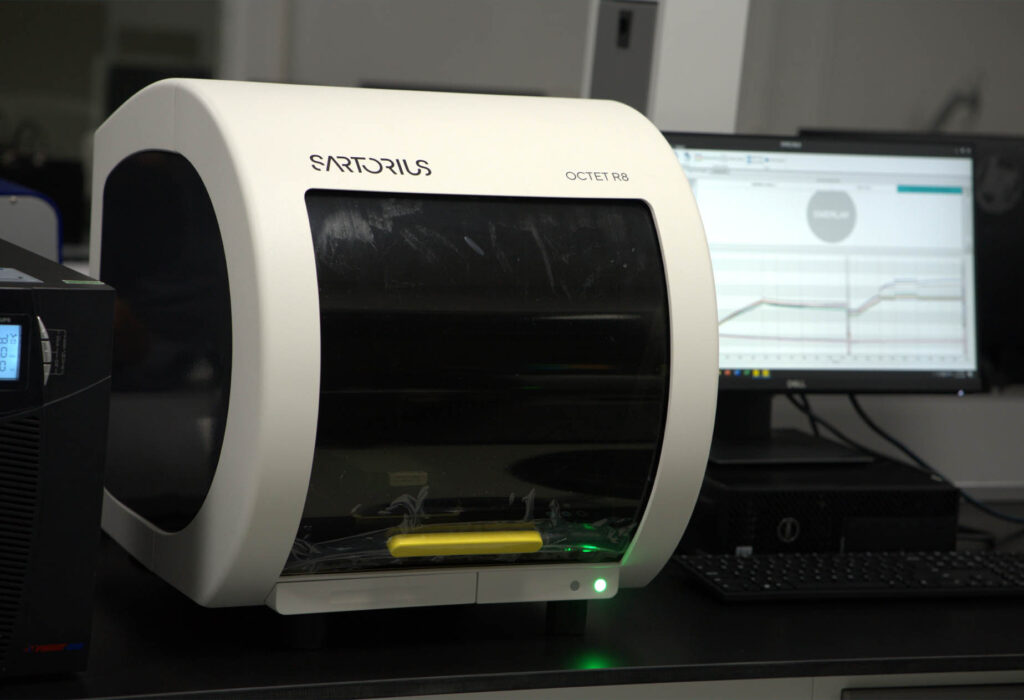
Make
Sartorious
Model
Octet R8
A bio-layer interferometry (BLI) based biomolecular interaction system is a laboratory instrument used to study the binding between two biomolecules, such as proteins, antibodies, or DNA/RNA molecules. The instrument works by measuring the interference pattern of white light reflected from a thin layer of immobilized biomolecule on the surface of a biosensor.
The BLI-based biomolecular interaction system allows for real-time monitoring of the kinetics and affinity of biomolecular interactions, and is used in various applications such as drug discovery, vaccine development, and basic research.
The system can provide quantitative data on the binding rate, dissociation rate, and affinity constants of the interacting molecules, which can help researchers understand the mechanisms of biological processes.
The biosensor used in the BLI-based biomolecular interaction system typically consists of a glass fiber optic with a thin layer of biomolecule immobilized on its surface. The biomolecule can be immobilized by covalent attachment, non-covalent attachment, or other methods.
Overall, BLI-based biomolecular interaction systems are powerful tools for studying biomolecular interactions in real-time, providing valuable insights into the mechanisms of biological processes and aiding in drug discovery and development efforts.