

Real-time PCR Machine
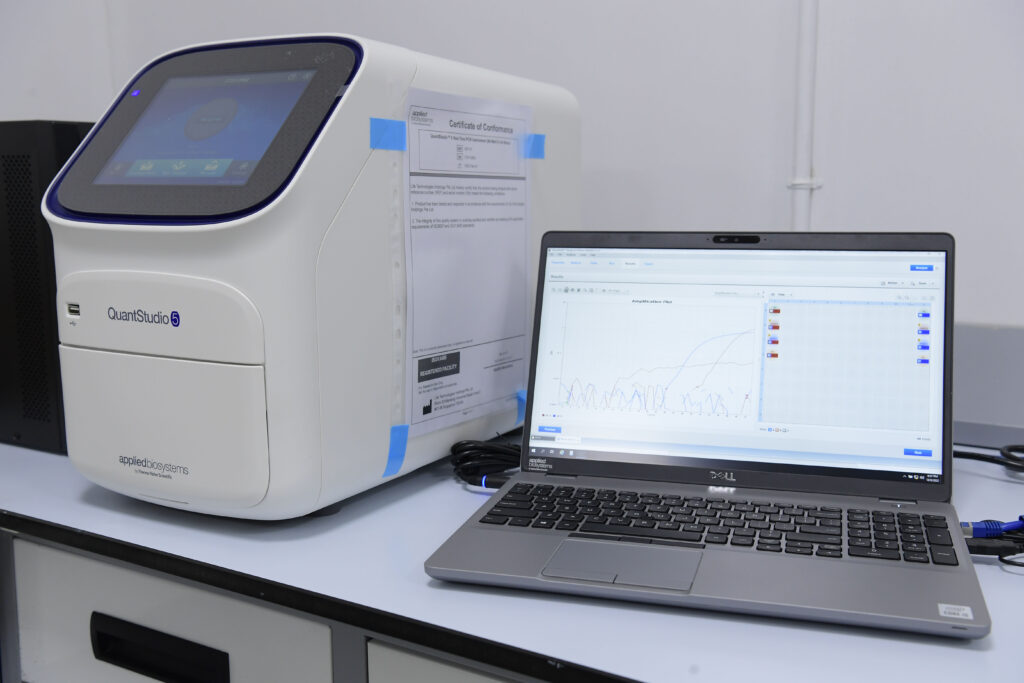
Make
Applied Biosystems
Model
Quantstudio 5
Real-time PCR (polymerase chain reaction) machine, also known as a quantitative PCR machine, is an instrument used to detect and measure the amplification of specific DNA sequences in real-time during the PCR process. It allows for the quantification of the starting amount of DNA or RNA in a sample by measuring the fluorescence emitted by fluorescent dyes or probes that bind to the PCR product.
Real-time PCR machines use thermal cycling to amplify DNA or RNA samples. The machine rapidly cycles through different temperature stages, including denaturation, annealing, and extension, to amplify the target DNA or RNA sequence.
During the amplification process, fluorescent probes or dyes bind to the newly synthesized DNA or RNA, and the fluorescence signal is detected and measured by the machine in real-time. Real-time PCR machines are commonly used in a wide range of applications, including gene expression analysis, genotyping, pathogen detection, and quantification of viral load in clinical samples. They are essential tools in molecular biology research and diagnostics, providing a highly sensitive and specific method for detecting and quantifying DNA and RNA in biological samples.