


Dr. Priya earned her doctoral degree in Biological Sciences from the National Institute for Interdisciplinary Science and Technology (NIIST) in Thiruvananthapuram in 2018. She then finished her post-doctoral studies at the Rajiv Gandhi Centre for Biotechnology (RGCB) in Thiruvananthapuram. In 2022, she joined the Institute of Advanced Virology as a Project Scientist I in the Department of Virus Application. She was awarded the “Biotechnology Career Advancement and Re-orientation (BioCARe) Programme for Women Researchers” fellowship from the Department of Biotechnology in 2023. She joined as Scientist C in the Department of Virus Application in 2024. Her research focuses on recombinant protein generation and human recombinant monoclonal antibody development against emerging viruses.
Institute of Advanced Virology, Trivandrum
Department of Virus Applications, Institute of Advanced Virology, Trivandrum
Viral Biotechnology
CSIR- National Institute for Interdisciplinary Science and Technology (Academy of Scientific and Innovative Research (AcSIR))
Amrita Vishwa Vidyapeetham
2023
Biotechnology Career Advancement and Re-orientation (BioCARe) Programme for Women Researchers, Department of Biotechnology
2022
Travel grant, International Society for Influenza and other Respiratory Virus Diseases (ISIRV)
2012
INSPIRE Fellowship, Department of Science and Technology, India
2011
First Rank Holder and Gold Medalist in Master’s in microbiology, Amrita Vishwa Vidyapeetham
Though the majority of viruses are considered harmful to human beings directly or indirectly, there are a number of them, which can be used for beneficial purposes. Our laboratory will employ an integrated approach using virology, molecular biology, and biotechnology to make virus or viral products as workhorses for the benefit of mankind. It will explore the possibilities of leveraging bacteriophages for construction of phage display library for monoclonal antibody generation, peptide libraries, and vaccine vector design. The lab will also investigate the possibilities of using viruses for therapeutic applications such as phage therapy.
2023-2026
Engineering Anti-Zika virus-neutralizing human monoclonal antibodies to reduce Fcγ-receptor-mediated antibody-dependent enhancement (ADE) effect, Department of Biotechnology [DBT]
Priya, P., Bhasi, A., Ali, S., Narayanan, N., Balakrishnan, M. V., & Bhaskaran, K. (2016). Community dynamics and significance of anaerobic protozoa during biomethanation of lignocellulosic waste. Renewable Energy, 98, 148-152 (IF-8).
Priya, P., Nikhitha, S. O., Anand, C., Nath, R. D., & Krishnakumar, B. (2018). Biomethanation of water hyacinth biomass. Bioresource technology, 255, 288-292 (IF-11.8).
Priya, P., Aneesh, B., & Harikrishnan, K. (2021). Genomics as a potential tool to unravel the rhizosphere microbiome interactions on plant health. Journal of Microbiological Methods, 106215 (IF-2.3).
Priya, P., Aneesh, B., Sivakumar, K. C., & Harikrishnan, K. (2022). Comparative proteomic analysis of saline tolerant, phosphate solubilizing endophytic Pantoea sp., and Pseudomonas sp. isolated from Eichhornia rhizosphere. Microbiological Research, 265, 127217 (IF-5).
Vipin, C. L., Priya, P., Harikrishnan, K., & Kumar, G. V. (2023). Enhanced cutaneous wound healing through MMP-8-responsive release of antimicrobial peptide from a porous chitosan-based scaffold. Journal of Drug Delivery Science and Technology, 89, 105069 (IF-5)
Shah, M. R., Priya, P., Harikrishnan, K., & Kumar, G. V. (2022). 3D Bi-layered hydrogel and nanofiber multifunctional sponge dressing: an efficacious healing agent for chronic and deep open wounds. (https://www.researchsquare.com/article/rs-1608159/v1)
Ambindei, W. A., Jazet, P. M. D., Tatsadjieu, L. N., Priya, P.,&Nisha, P. (2020). Stabilisation potentials of the essential oils of Thymus vulgaris L., Cinnamomum zeylanicum B. and Mentha piperita L. on palm olein at accelerated storage. African Journal of Biotechnology, 19(7), 464-477.
Sabu, R., Aswani, R., Priya, P., Krishnakumar, B., & Radhakrishnan, E. K. (2018). Differential Modulation of Endophytic Microbiome ofGingerin the Presence of Beneficial organisms, Pathogens and Both as Identified by DGGE Analysis. Current microbiology, 1- 5 (IF-2.16).
Ambindei, W. A., Jazet, P. M. D., Tatsadjieu, L. N., Priya, P., Manilal, V. B., Krishnakumar,B., & Zollo, P. H. A. (2017). Effect of the essential oils of Thymus vulgaris, Cinnamomum zeylanicum and Mentha piperita on fungal growth and morphology. African Journal of Biotechnology, 16(9), 388-399.
Wilson, A. A., Leopold, T. N., Michel, J. D. P., Priya, P., Mariya, A., Manilal, V. B., & Henri, Z. P. (2016). Isolation and Molecular Identification of Fungi in Stored Maize (Zea mays L) and Groundnuts (Arachis hypogaea L) in Ngaoundere, Cameroon. American Journal of Microbiological Research, 4(3), 85-89.
Anupama, V. N., Prajeesh, P. V. G., Anju, S., Priya, P., & Krishnakumar, B. (2015). Diversity of bacteria, archaea and protozoa in a perchlorate treating bioreactor. Microbiological research, 177, 8-14 (IF-5)
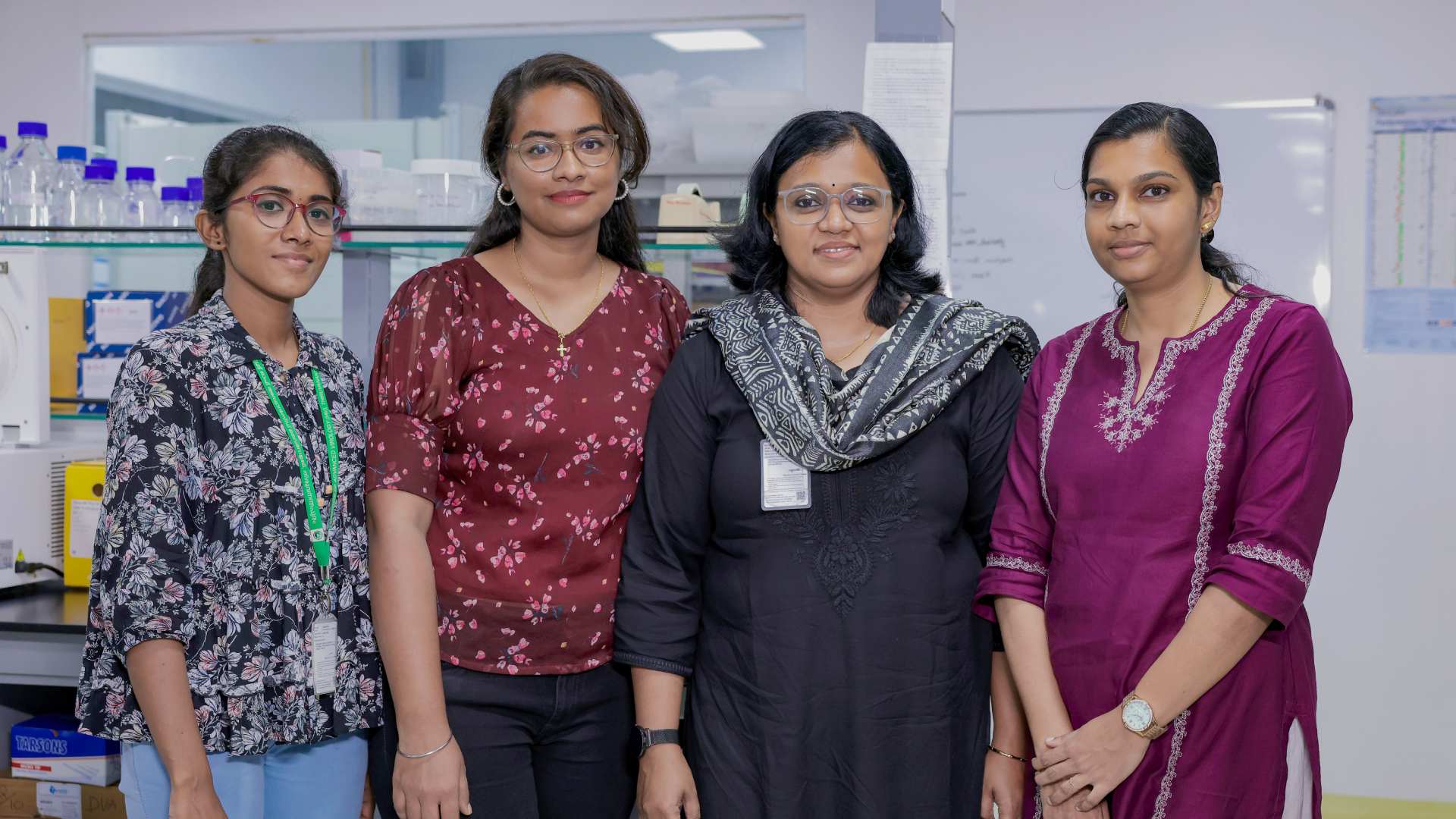
Project Associate I
meenakshimohans.iav@gmail.com
Project Associate I
ashluke212@gmail.com

Project Scientist
amalunavas@d1.iav.res.in