


Twelve years of research have focused on the development of novel techniques for pathogen (virus and bacteria) detection, isolation, genetic and pathological characterisation, host protein-directed antiviral discovery, and adeno-associated viral/lentiviral vector-based shRNA, gRNA, and gene delivery for treating virus infections. Our lab focuses on identifying the viruses through virus discovery approaches using virus-metagenomics and determining their evolutionary development, mutations, prevalence, pathogenicity, and host range to prepare for future large outbreaks/pandemics, preventing the ongoing short chain of infection and providing effective treatment, and prioritizing risk factors, risk areas and pathogens for policymaking.
Institute of Advanced Virology, Trivandrum
Department of Microbiology and Cell Biology, India Institute of Science, Bengaluru
Host-pathogen interaction, Virus discovery and evolution, One Health
Indian Veterinary Research Institute, Izatnagar, Bareilly, UP
Indian Veterinary Research Institute, Izatnagar, Bareilly, UP
2017
DST-INSPIRE Faculty, Department of Science and Technology, Govt. of India
2014
Best Oral presentation award- International Symposium, 32nd Annual Convention of ISVM & International Symposium
2013
Young Scientist Award, Indian Association of Veterinary Pathologists and IV Annual Meeting of Indian College of Veterinary Pathologist
2013
Best poster award, National Symposium of Indian Poultry Science Association
Our research team is primarily focused on virus discovery using virus-metagenomics, isolation, and pathological genetic characterization and host protein-directed antiviral discovery, gene delivery-based antiviral discovery for emerging and re-emerging viruses. Accordingly, we have performed genetic and pathological characterization of Newcastle disease virus genotype VIIi, and genotype III Japanese Encephalitis Virus (JEV), and identified PARP1 inhibition protects mice against Japanese encephalitis virus infection using the PARP1-knockout mice model and CRISPR/Cas9 mediated KO-cells, siRNA/shRNA-mediated genetic knockdown and Adenovirus-mediated over expression models. In addition, we delivered the SIRT2 mice brain using Adeno-associated virus delivery for the therapeutic purpose against JEV. Similarly, we have disclosed the Beak and Feather Disease Virus to be host-specific, classified the newly discovered CRESS-DNA Viruses, generated the proof of concept of the Torque Teno Virus being a Naked DNA Particle without a virion structure, and identified Human Endogenous Retrovirus K113 as severity biomarkers of SARS‐CoV‐2. Our study reported the gain of novel spike protein (S1-NTD) in the pandemic SARS-CoV-2, and genetic variations in pandemic Omicron BA.2, BA.3, BA.4, and BA.5 of SARS-CoV-2. Specifically, we reported point mutations to accumulate in pandemic Mpoxv-Clade-IIb-A, and B.1 lineages through selection pressure.
2023
Virus-Metagenomics-based Virus Discovery from Symptom-specific Human Clinical Samples, Institute of Advanced Virology- Flagship Project
2017-2023
Role of SIRT2 in the molecular pathogenesis of Japanese encephalitis virus infection: a clue for novel anti-viral therapeutics. Department of Science and Technology, Ministry of Science and Technology, India
2019-2022
Role of sfRNA in Japanese encephalitis virus pathogenesis: A novel clue for identifying and targeting the antiviral biomolecules. SERB-Core Research Grant
Desingu, P.A*., Mishra, S., Dindi, L., Srinivasan, S., Rajmani, R.S., Ravi, V., Tamta, A.K., Raghu, S., Murugasamy, K., Pandit, A.S., et al. (2023). PARP1 inhibition protects mice against Japanese encephalitis virus infection. Cell Reports 42, 113103. (* corresponding Author)
Desingu, P.A*., Rubeni, T.P., Nagarajan, K., and Sundaresan, N.R*. (2023). Molecular evolution of 2022 multi-country outbreak- causing Monkeypox virus Clade IIb. iScience, In-Press. (* corresponding Author)
Desingu, P.A*., Rubeni, T.P., Nagarajan, K., and Sundaresan, N.R. (2023). Sign of APOBEC editing, purifying selection, frameshift, and in-frame nonsense mutations in the microevolution of Lumpy Skin Disease Virus. Front Microbiol. Volume 14 – 2023 | doi: 10.3389/fmicb.2023.1214414. (* corresponding Author)
Desingu, P. A*., Rubeni, T. P., & Sundaresan, N. R. (2023). Deciphering the Origin of DNA Viruses (Replication-Associated Parvo-NS1) That Infect Vertebrates from Invertebrate-Infecting Viruses. Microbiol Spectr, e0457022. doi:10.1128/spectrum.04570-22. (* corresponding Author)
Desingu, P. A*., Nagarajan, K., & Sundaresan, N. R. (2023). Unique Tandem Repeats in the Inverted Terminal Repeat Regions of Monkeypox Viruses. Microbiol Spectr, 11(2), e0319922. doi:10.1128/spectrum.03199-22. (* corresponding Author)
Desingu, P.A*., Singh SD, Dhama K, Vinodhkumar OR, Nagarajan K, Singh R,et al. (2021). Pathotyping of Newcastle Disease Virus: a Novel Single BsaHI Digestion Method of Detection and Differentiation of Avirulent Strains (Lentogenic and Mesogenic Vaccine Strains) from Virulent Virus. Microbiology Spectrum 9, e0098921, doi:10.1128/spectrum.00989-21(2021). *Corresponding author
Desingu P.A*., Rubeni TP, Sundaresan NR. Evolution of monkeypox virus from 2017 to 2022: In the light of point mutations. Front Microbiol. 2022 Dec 14;13:1037598. doi: 10.3389/fmicb.2022.1037598. eCollection 2022. *Corresponding author
Desingu, P. A*., Nagarajan, K. & Dhama, K. (2022). Emergence of Omicron third lineage BA.3 and its importance. Journal of Medical Virology, doi:10.1002/jmv.27601 (2022). *Corresponding author
Desingu, P. A*. & Nagarajan, K. (2022). Omicron variant losing its critical mutations in the receptor-binding domain. Journal of Medical Virology, doi:10.1002/jmv.27667 (2022). *Corresponding author
Desingu, P. A*. & Nagarajan, K. (2022). Omicron BA.2 lineage spreads in clusters and is concentrated in Denmark. Journal of Medical Virology, doi:10.1002/jmv.27659 (2022). *Corresponding author
Desingu, P. A*. (2017). Routine fruit washing to prevent acute toxic encephalopathy. The Lancet Global health 5, e863, doi:10.1016/S2214-109X(17)30290-5 (2017). *Corresponding author
Desingu, P. A*. & Nagarajan, K. SARS-CoV-2 Omicron variant is spreading in different parts of the world in three different trends. Journal of Medical Virology, doi:10.1002/jmv.27646 (2022). *Corresponding author
Desingu, P. A*., Nagarajan, K. & Dhama, K. (2022). SARS-CoV-2 gained a novel spike protein S1-N-Terminal Domain (S1-NTD). Environmental Research. 2022 Aug;211:113047. doi: 10.1016/j.envres.2022.113047. *Corresponding author
Desingu P.A*, Nagarajan K. (2022). The emergence of Omicron lineages BA.4 and BA.5, and the global spreading trend. Journal of Medical Virology, 2022. doi:10.1002/jmv.27967. *Corresponding author
Desingu P.A*, K. Dhama and Y.S. Malik. (2016). Newly Defined sub-Genotypes Va and Vb of Newcastle Disease Virus in Poultry– May be Considered as two different genotypes?. Journal of Clinical Microbiology, 54:2204. doi:10.1128/JCM.00758-16. *Corresponding author
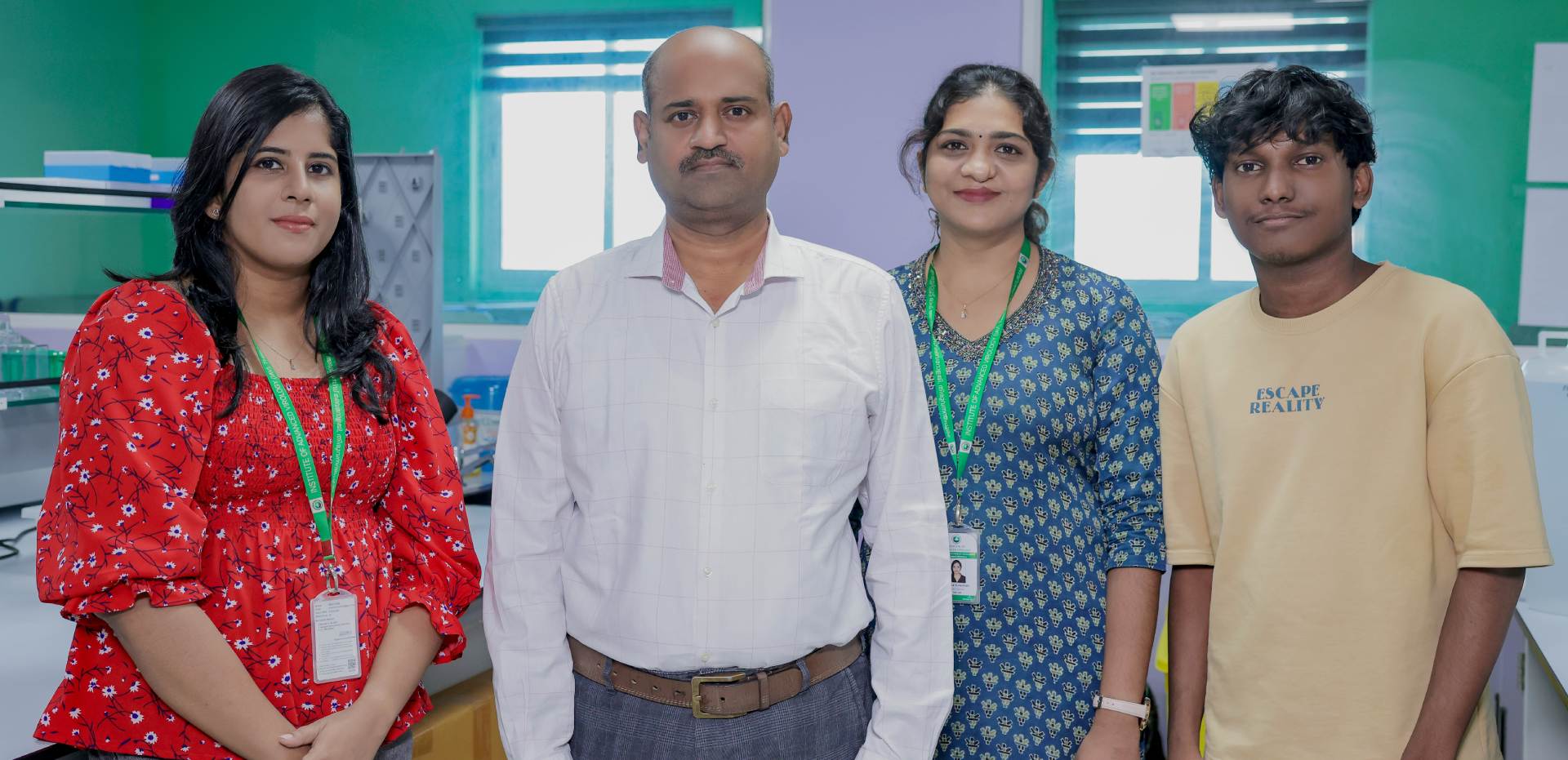

Project Associate
anjalikrishna2015@gmail.com

Project Assistant
aparna20aditya@gmail.com

Project Assistant
nithin3003@gmail.com